Call for Proposals at PUSH UX 2026

Keynote Talks and Lightning Talks

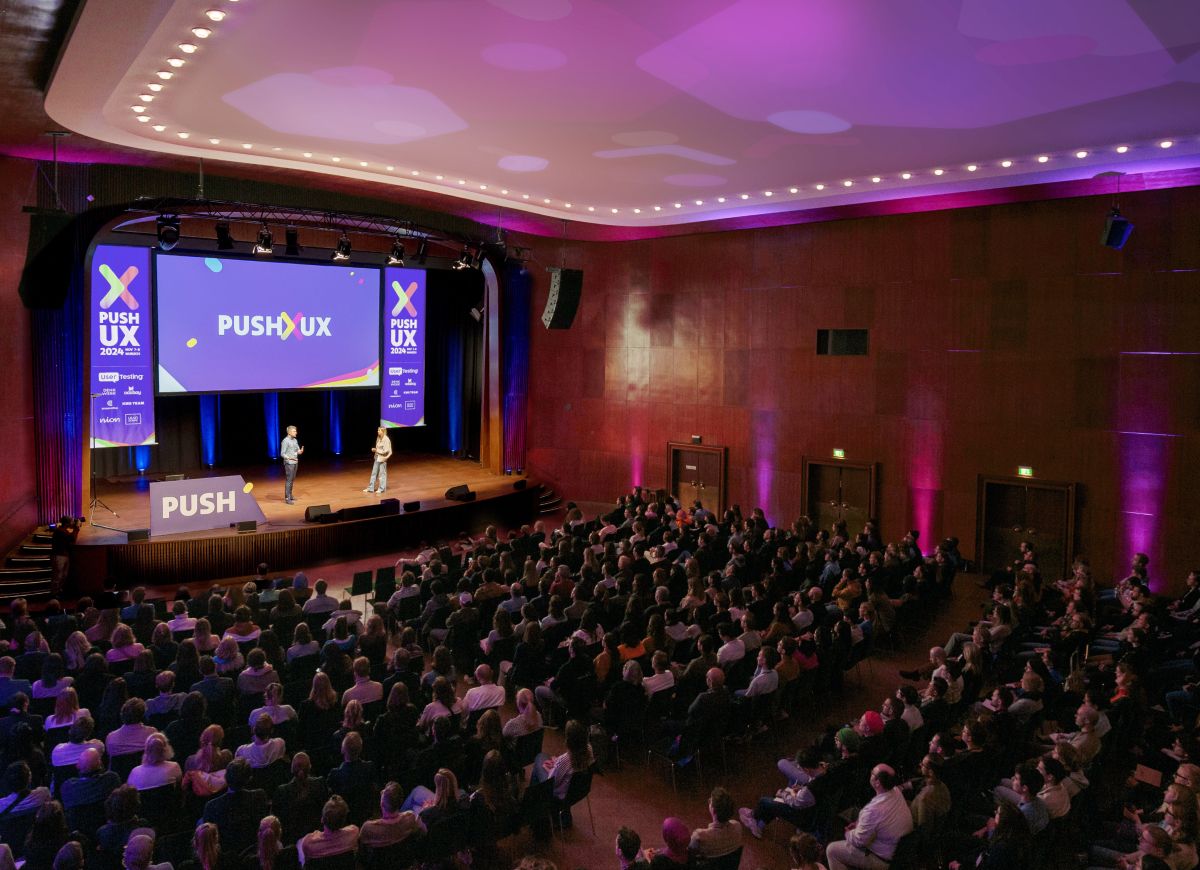
Keynote Talks

For speakers with authority and experience who bring key content that's relevant to the majority of the audience.

Keynote talks form the single track stage program in the morning and afternoon each day, in front of the entire audience.

Most last 25 minutes, but we'll occasionally allocate 45 minutes to particular deep-dives.
Lightning Talks

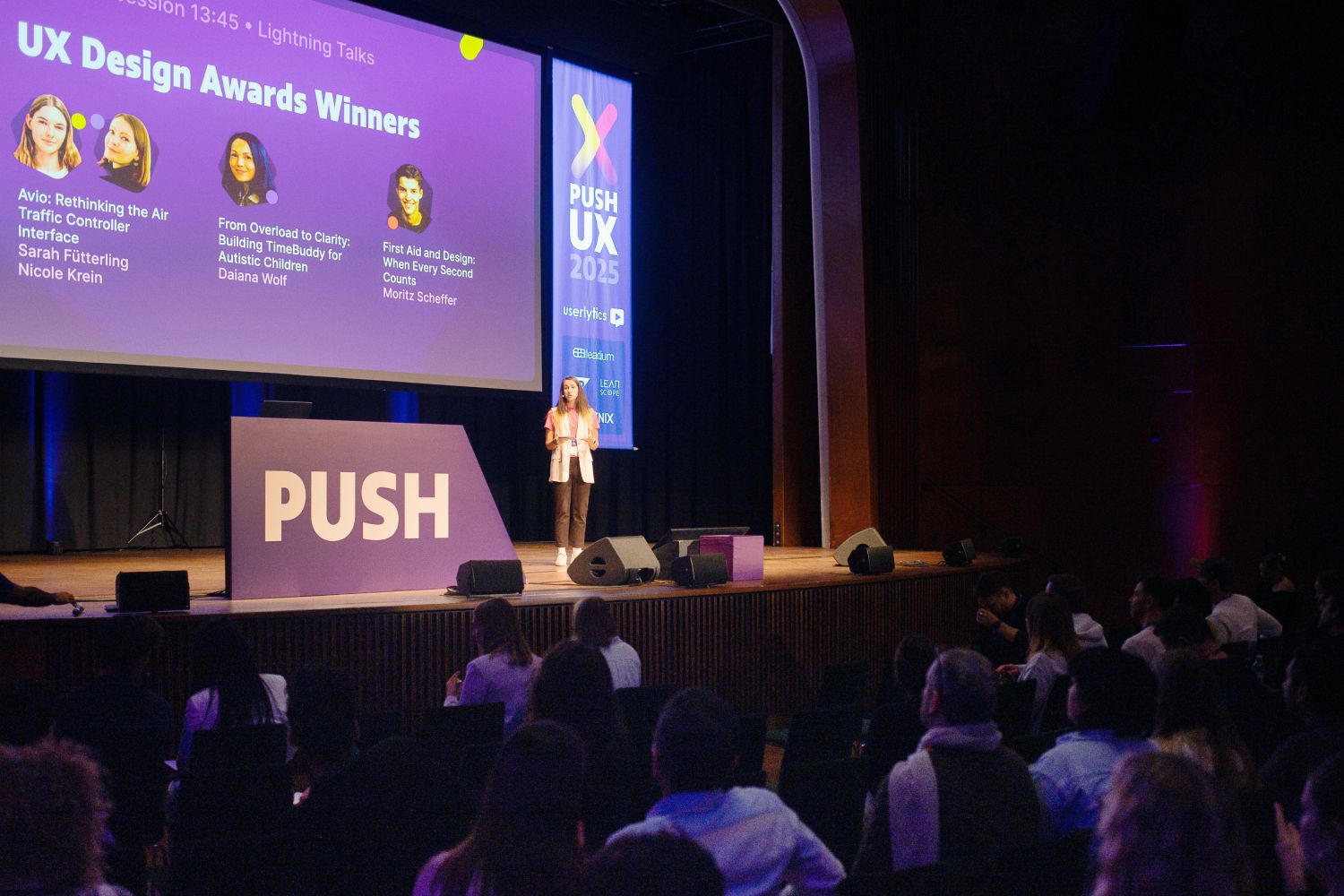
15 minutes each, they are part of the multi-track breakout time. They bring 3 unique strengths to the program:

Specialisation, low effort and risk, and variety

If you're a specialist or leader, preparing a short talk fits tight schedules, and it might be more valuable to speak to an audience of peers than a broad mass.

If you're just developing your speaker profile and looking for experience, the medium audience size and shorter runtime lower the barrier. And feedback from 2025 particularly highlighted that our experienced audience values fresh ideas that upcoming designers bring.

Lastly, the faster pace enables to cover a wider range of topics in the program, making it more valuable for everybody.
Requirements and tips

In 13 years we've reviewed well over 1000 proposals as part of curating for PUSH UX.

Here are our learnings summarised for you.

Because we too want your proposal to be the strongest it can possibly be.

Take your time and prepare your content without pressure using our handy template.

Once you're ready, simply copy everything to the submission form.

First: The 2 most important details we look for

This is where most submissions fail to get past the first review.

Authority

What makes you particularly well suited to speak about this topic?

The strongest signals that convince us are first hand experience, case studies, original articles, or even an existing version of your talk or session.

If you don't have those yet, develop a draft or rough outline, anything that serves as a teaser and example. Bring to life what you'll likely cover with your session, and how you'll approach this.

First Hand Content

Show us that your talk and take-aways are built on your own original thinking and practice.

Nothing beats personal experience: Real case studies, real failure, real advice.

The holy grail: Showing how you solve specific problems in real projects – this behind-the-scenes look at other practices and companies will strongly resonate with the audience, and our curators.

Do's and don'ts to make your proposal stand out

Things to pay attention to, and things to avoid.

Do: Start at the end

Imagine you sit in the audience and somebody else gives your talk.

Which key points would you note down to remember and share with a colleague back at the office?

"How to do X" is not a take-away.

"Achieve X by doing Y" is.

Be as specific as you can. Not only will this enable our curators to understand the value your talk will provide to your listeners. Having this clarity will help yourself in shaping your narrative and slides.

Do: Make it applicable

The number one ask by guests is for talks that provide concrete advice they can apply back at the office on Monday.

Inspirational talks are fantastic, and some always have a place on our stage. Yet high level topics also make up the majority of submissions we receive.

If you want to stand out to us and give the audience what they are looking for, consider a practice oriented topic. Try to include clear instructions that people can apply.

What real world examples, specific principles, techniques, tools, best practices, templates or insights can you offer?

Do: Help us get to know you

The best way to get us excited about your presence as a speaker is a recording of you in a similar context.

Perhaps you've given the same or a similar talk before? Excellent! You can include a link to the video in your proposal.

And we're just as happy if you're starting your journey as a speaker. Simply give us a taste with a brief recording of a section of your talk draft at home. Makes for good practice, too.

Avoid: Speculative proposals

Don't stop at a few sentences and bullet points, and promise to develop a full talk later if you get selected.

If you have an idea you are passionate about, develop a draft or rough outline, write an article, anything that serves as a teaser and example. Bring to life what you'll likely cover with your session, and how you'll approach this. This doesn't have to be final by any means.

But a tangible sense of what you're building your proposal on gives our curators significantly more clarity and confidence to select your proposal.

Avoid: High level talks, awareness building, and evangelism

Avoid predominantly theoretical high level content and messages.

Theory is important – but our audience wants to hear what it means for their actual practice.

The same goes for raising general awareness. Expect an experienced audience who reads blogs and informs themselves.

Ask yourself: Is your topic so new or outside expected fields of view that pure awareness is valuable to the audience? Otherwise consider focussing on the how, over the what and why.

Frequently asked questions

Do you support travel and accomodation?

We cover accommodation and travel for keynote talk speakers.

We can not cover accommodation or travel for lightning talks.

Is there a template to prepare my content?

Yes! Simply make copy of this Google doc and you're ready to go.

Can multiple speakers give a talk together?

Yes, but there should be a clear reason and benefit. Please make a case for this in your submission details if needed.

For example, a talk might discuss great collaboration between design and engineering. Here, a designer and an engineer as co-presenters might be able to make their case more strongly and provide valuable points from their particular perspectives.

Based on our experience, multiple speakers increase the complexity of every aspect of the presentation. We only recommend it for seasoned speakers, or if you are sure you can manage the added complexity by investing more time in preparation and rehearsals.

Is there a deadline?

No. We aim to finalise the program 2 months before the event.

We will close the Call for Proposals when we've reached this milestone.

When will I receive a decision about my proposal?

We review submissions on an ongoing basis rather than at a single deadline date. The sooner you send yours, the sooner we can consider your proposal in the board of curators.

Since the narrative of the program evolves over time, we might reach out to you quickly or closer to the conference.

We aim to finalise the program 2 months before the event.

Can I submit multiple proposals?

Of course! Here's how:

  1. Start the flow in the submissions form below. The first step is to create a host profile so that you only need to enter this information once.

  2. Submit your first breakout session or talk proposal.

  3. At the end of the flow you can choose to submit another proposal, if you have the details ready right now. You can repeat this as often as you like.

  4. Alternatively if you want to add one proposal now and others later, you can use the personalised link we send to you in your submission confirmation email. With that link you can start a new submission any time in the future. This way we can connect all your proposals to your existing host profile, no matter when you submit them.

Can I submit a proposal on behalf of a colleague?

Yes. In this case it is your responsibility to ensure that you have their consent to share their personal data and their content.

What languages can my talk use?

The official language of the conference is English. This includes all talks, breakout sessions and workshops.

Please submit your proposal in English, and be prepared to give your talk in English.

Content samples can be submitted either in English (preferred) or German. Speaking samples should include at least one in English.

Should I buy a ticket while waiting for a decision?

If you want to attend the conference no matter if you’re also invited as a speaker, we recommend you buy a ticket as soon as possible.

This way you can be sure to have a spot and get the best possible price.

If your proposal is accepted later, we will of course switch you to a free speaker pass and fully refund your guest ticket.

The submission and review process

Create your profile

Verify your email, then tell us about yourself.

Only needed once. You'll receive a personal link to submit one or more proposals that get linked to your profile.

Pick a format

Choose between a talk or an interactive breakout session.

You can submit multiple proposals, including versions of your topic for different formats.

Submit your proposal

Share the details about your proposal – make sure to review the tips and requirements for the chosen format.

We provide handy Google doc templates to prepare before submitting.

Review & decision

We review proposals on an ongoing basis. If we have a decision or need more details we'll reach out directly.

We aim to finalise the program 2 months before the event.

Ready to submit?

Start your profile through the form below. Watch out for links via email to complete your profile and to submit proposals connected to your profile.

You can also prepare your content upfront using our handy Google doc template.

Our Partners in 2025

Media Partners